Showing posts with label technical. Show all posts

Wednesday, 8 January 2014

AbsoluteBlack single ring set up

I used to run a single ring, with guards, in the 1990s. I liked the simplicity of concept, it reduced weight a bit but more importantly it helped a bit with clogging. But since then I haven't really bothered to set one up again, mainly as the guards always seemed to rub with the chainline being difficult to set up. Modern re-inventions tended to involve chainkeepers attached to the seat stay, rather than the simple traditional double guard I used to use, and so lost the advantage of getting rid of a front-mech like object, neatly positioned around the bottom bracket area to successfully collect mud and vegetation.

It was with interest then, that I received a test 38 tooth ring (via Dave Haygarth) from Marcin at AbsoluteBlack. This ring differed from stuff I had seen previously, borrowing from the growing mtb market for single rings, and featuring a cleverly milled ring that requires no guard, chainkeeper or any other device to make it stick on. I was initially skeptical but equally hopeful that this could be the ideal solution to dealing with super muddy conditions later on in the 'cross season.


Matched to my On One Pickenflick and it's huge mud clearance, I've been running the ring in training and racing and can now report back. Set up is key to getting this ring to work. It's not hard, it just needs to be done right. Chain tension as well as the teeth profile is what keeps the chain on through the rough and the boggy, and chain length needs to be optimised to gain maximum advantage from the ring. Successfully installed, with clear instructions from AbsoluteBlack, the initial feel through the pedals was instantly positive. Maybe you don't pay too much attention to how your chain feels as you pedal, as opposed to your legs, but I could feel a smoothness that wasn't present on my perfectly good double chainset set ups.

The ring has now done a variety of races, and training sessions and in a variety of conditions and has passed all tests with flying colours. Bumpy tracks don't faze it - it hasn't been possible to bounce it off, though me and Dave have tried hard. It's trained and raced in thin sloppy mud, sticky mud (Bradford) and Todmorden (ie biblically thick) mud and simply kept on going. In many hours of use, I had one small problem at Todmorden Cross when a large, ripped up clod of soil got under the chain and onto the ring and caused the chain to fall off. But, and here is the crucial bit, it was super easy to get back on - no jamming on a chaincatcher, no falling between ring and bottom bracket and sticking, just an easy flick to get back on. Over the period of use and in the conditions I rode it in, I would have expected to drop a chain or have problems on a double set at some point anyway. No system is perfect, but the AbsoluteBlack ring works as well, if not better than anything else I've used.

Pic: Dave Haygarth

As I indicated earlier, the main advantage for me of a single ring is reduced clogging and this positive effect has been clearcut. No bike is clog free, and even if the frame keeps free then the cassette can often stop working properly anyway. But, the AbsoluteBlack ring set up and the resulting simplicity around the bottom bracket area has markedly reduced mud and vegetation build and kept the bike not only trouble free, but weighing less as a result too. Paired with an 11-28 block (10 speed chain, Sram Red rear mech), my 38 tooth ring gives me all the gears I had before and I have never missed the potentially wider range of gears a more traditional double set up gives. From now on, I'll be running this setup on my Pickenflick during the winter season and for me it's a perfect solution to the increasing levels of mud our climate seems to bring u.

UPDATE Jan 14:

I rode the last NWCCA race of the season recdently, starting on my bike with the single ring on. To my surprise, I had a couple of problems with the ring, dropping the chain on both occasions. After consultation with Marcin from absoluteBlack and some careful analysis of my actions and course conditions at the time, I feel fairly confident I've pinpointed the problem.

In essence, both 'drops' were caused by my very rapid changing of gear up the block on transitions from bumpy descent to slow grinding section. According to Marcin, changing 3 or 4 cogs in one movement will result in instability for any chain (on a single ring or otherwise). Ally that to a bumpy section, with no chain guard or front mech to hold the chain on and you have the problem. The solution, a technique which he maintains pro mountain bikers have been following for years, is to shift one cog at a time, rather than the multiple cog, rapid shifts that I was doing. The concession for this is that it takes a little forward planning so as to avoid rapid dumping up the block as the speed slows down. Marcin maintains also that the mtb testers for his single ring have not dropped the chain in testing due to their attention to this technique and that he often finds cyclocross riders are a bit 'gung ho' in shifting technique and could do with refining their actions. Certainly, I have never dropped the chain in thick mud, nor even on a descent - the 3 times I have had a problem have ALL followed multiple shifting into an easier gear before a slow boggy section.

UPDATE 2 Feb 14:

 After some discussions with Marcin from absoluteBlack, it's important to point out that the spring tension on Shimano mechs needs optimising to make the ring work to the best of its capability. Here's what it says on the absoluteBlack website....

Important information for SHIMANO derrailleur users:

In order to get best results we recommend increasing cage return spring tension. New derailleurs are assembled with the spring in the mount that allows the most relaxed position of the spring. However there is another position on the cage which will increase that tension. It is a standard procedure, please navigate to point no.7 in the link. You may also ask your LBS to do it for you.

Sram users are not required to do that as oem springs are already in high tension position.


If you missed it, here's Dave's recent video too:


Monday, 17 June 2013

Choosing your tread for cyclocross tubulars


The most common question I get asked about 'cross tubs, at races, in emails and on twitter is....

What's a good all-rounder tread to get?

Or a derivative thereof.

It's a good question - most people asking it are just starting off with tubulars, or only wanting to invest a modest amount and are therefore looking for one wheelset, on one bike to cover all conditions.

Unfortunately, it's a bit like the question 'how long is a piece of string?'. There are so many variables to take into account - rider style, weather, soil type, frequency of use and so on. However, I've tried to put together a handy guide to get you thinking about how to choose your first or sole pair of tubulars, with a few recommendations to start you off. You will doubtless pick holes in my reasoning, find exceptions, struggle in snow and want a clincher alternative to boot. You're probably right on all counts but life is too short to cover it all.... unless you want to buy me a pint and make your pitch.

Rider style:

Mountainbike background? Roadie? BMXer? The higher your confidence in your bike handling skills, the less critical the choice is in many ways. I'm not the best bike handler so make up for it by getting tread choice and tire pressure absolutely right for the conditions. In really slick conditions, I've been outridden by better bike handlers on a less than optimal tread choice ie their only choice, but at least stacking the odds in my favour keeps me moving forward. If you are not blessed with ninja skills then err on the side of a more mud oriented tread as you will struggle less in the mud than you will lose in the dry.

Climate:

I always laugh at London-based 'crossers. No, not because they are in London (well a little bit) but because they seem to be using general tread choices long after we North-West riders have switched to mud treads. Last year, in the NW of England, we started on muds and that's how it stayed all season. Most of the recent seasons have been like that too. Even in Summer Cross, us Northerners are using muds most of the time. If where you live is not the rainfall capital of the country then perhaps a more general tread is the best one-shot choice. If you live in NW England, then just get muds and be done with it, for all year use.

Soil type:

I have a twitter acquaintance (@philipglowinski) that studies geological maps of new race venues to get clues about the likely soil type. Most people would probably scoff but I'm a bit geeky too and thought that was brilliant. Either way, the point is soil type can make a big difference even given the same rainfall as on a differing type elsewhere. Case in point, Sutton Park, much loved as a classic venue for National Champs, was usually pretty fast and dry given the sandy soil. Heavy rain rarely turned it into a complete mudbath, unlike Peel Park, Bradford which only requires a light sprinkling to become pretty tasty for the mud lovers. South East soil types tend to be different to NW soil types to South West soil types etc etc Check yours out - is it essentially a faster drying soil type, or more loamy, or clay based. It'll give a starting point at least.

How often are you racing?

Most treads wear reasonably well these days, but more aggressive treads do by definition wear more when used on frequently on harder surfaces. Thus your mud tread specials might look a bit worse for wear if you blast around on hardpack surfaces a lot in between the odd mud race. Worth thinking about as tubs of any description are not cheap these days.

So what do I rate?

Predominantly muddy races/NW England/Yorks - FMB SuperMud or Dugast Rhino

You won't go far wrong with a mud tread like FMB SuperMud. Designed as a direct competitor to the imperious Dugast Rhino, I've written about them here, and rate them as better all round than the Rhino which is still pretty damn good. They work well in drier conditions too as they are not quite as aggressive. Comprehensively pre-sealed and double stitched by Francois at FMB, they will last you a few seasons too if looked after.


FMB SuperMud

Dugast Rhino


Recently a lot of folks have been impressed with the Challenge Limus - it has a great tread, a good supple casing and seems to shed well. Perhaps struggles a bit in quicker conditions due to the aggressive tractor style tread but nonetheless a good choice and more available than exotica from FMB or Dugast.


Challenge Limus


Alternatives worth looking for - Clement PDX (super aggressive tread). Vittoria XM (robust, reasonably agressive tread)

Intermediate conditions - not too many mudbaths, drier soil types

The benchmark for years has been between Dugast Typhoon and Challenge Grifo. Both great, both proven. But... there are new interlopers in the scrap.

FMBs SSC is similarly styled to the above, in terms of tread but the knobs are a little taller and a little more aggressive - like a Rhino on the edges. Therefore, it handles muddier conditions just that little better whilst still rolling fast in the dry. I've used them and really rated them.

FMB SSC


The new kid on the block is the Dugast Small Bird - my test pair are about to arrive so I can't yet say what they are like, but the idea is sound with them being essentially a revamped Rhino style tread, busier like a 'small block 8' type mtb tread for the dry, lower central knobs with a harder compound in the centre and softer more aggressive side knobs. Best of both worlds job hopefully and they could maybe be the ultimate one-job tread.


Dugast Small Bird


Alternatives worth looking for - Schwalbe Racing Ralph (light, supple casing, bit low on volume in the casing), Gommitalia Magnum (see Grifo), Vittoria Evo XG (robust, bit sketchy in mud), Challenge Fango

Summer Cross

If you live in the North West or Yorkshire - see mud tires.

For those elsewhere, FMB Sprints are pretty awesome in the dry, AND pretty awesome in light mud too. With a surprising amount of grip from the stipples, the really aggressive side knobs keep you upright in most light mud conditions, and even on greasy, rain-slick, previously sun-baked grass. Just.

FMB Sprint


Alternatives - Challenge Grifo XS (more an out and out dry tire than the Sprints)

Everybody has their own favourite, their own opinion. Feel free to take me to task in the comments below and add your bit. I have ridden most of the treads outlined above but not all and there are some out there that I haven't mentioned that are worth a look too.

Gruff but friendly Nottingham importer John Holmes does great prices on Dugast tubulars as well as FMB - mention my name when you call him on 07946 461972.

Fangoso should soon also be able to hook you up with some FMBs.

Thursday, 15 November 2012

Mentorship

Pic: Dave Haygarth

I realised the other day that I'm lucky enough to have two 'cross mentors. They'd been there a while but I hadn't quite noticed the impact they were having for the good, on my 'cross endeavours.

Now I'm no elite athlete - I had some success with 'cross in the early 90s when a full time student, I mean athlete, winning quite a few local League races and getting a top 25 position at the Nationals - but although the results have significantly tailed off of late, 'cross is still my passion and I want to improve simply for improvements sake. A big gap in 'cross particpation from 1993 till a few years ago has meant a steep re-learning curve, as well as a bafflement as to why my body does not respond the way it used to. The first point is easy to document, the second is a little harder toe explain but that's for another day.

Anyways, I've been fortunate to hook up in recent years with the effervescent Dave Haygarth, who whilst nearly wrecking me many times with his superior fitness, technique and ability in countless training sessions together, has been kind enough to pass on much of his hard earned race-craft and technical skill to my benefit. Don't underestimate the value of riding and training with someone who is better than you, particularly if they share what they know. My ego crumbles at times but I bounce back, determined to get a little closer to him next time. And it's coming....

My other 'cross mentor is Greg May - a (not-for-long?) Dublin based exercise physiologist and coach with a no nonsense, slightly old skool approach backed up with heaps of science. Greg and his partner Pauline (a talented IronWoman) have been regular guests at mine on Greg's racing forays outside Ireland and during these trips, and between he has regularly passed on nuggets of training advice around intensity, structure, technique and a lot more.

Greg's approach can be summed up in this superb article on 'cross training. I won't repeat it in full - go read it for yourself - but a couple of bits jump out for me:

CX is not a pretty sport. If you don’t train in the suck you won’t be able to race in the suck. 

'I can’t corner in mud' – Well no one can…you just get less bad at it. Practice...

Sometimes the best advice is the most simple - you can dig out an entire seasons success from that small article but better still, go find yourself a mentor, a training partner, a 'cross soulmate and learn together the only way there is - by getting muddy.

Monday, 5 November 2012

Prototype Planet X Pro Carbon XLS Cyclo Cross

I've been lucky enough to have been riding around on a sample Pro Carbon XLS for a good while now, and now it's on sale can finally spill the beans.....

UPDATE: new production version of the XLS


Constructed from 12k carbon it's a full carbon disc cross frame that is aimed fair and square at the race-savvy cross rider. It's the sharpest feeling cross bike I've ridden with snappy handling and a very stiff response to hard out of the saddle efforts. A large (PF30) bottom bracket area contributes to this stiffness, as do the boxy rear chainstays and the tapered headtube (1.25 - 1.5") that keeps things solid upfront too.

Cable routing is all internal across the top tube with no under bottom bracket cabling to keep things clean and tidy, as well as helping to cut down on maintenance after drownings with the jet wash. The top tube itself is one of the most comfortable I've ever carried with, being unencumbered with cables and perfectly flattened to lay neatly across your shoulder. The rear disc tabs are at the rear (rather than in the rear triangle), allowing easy access too for pad fettling.

Clearance is great up front and rear, despite the 'racy' tolerances between rear tyre and bottom bracket area, and during mudfests has presented no significant problems despite some build up in that area. The absence of cantilevers and bosses more than makes up for any build up of mud there and my bike has kept working fine even when conditions are really bad.


The beefy headset, stiff bottom bracket and boxy stays mean this frame just flies under pressure - compared to alloy cross bikes I've had the difference in stiffness is startling. It's not a harsh ride on rougher surfaces, just purposeful, giving you lots of feedback about what surface conditions are like. It builds up light too - with higher end components and carbon wheels it's happily threatening sub 18lb territory and so carrying feels superb on that comfy top tube.

It's just too tempting not to make comparisons  between the XLS and it's sister company's One One Dirty Disco that I've also been riding. Both are superb race bikes with surefooted handling, good behaviour in the mud and light, practical (ie robust) carbon frames. Whilst the Disco also makes for a good all-round off-road riding bike, eminently suitable for 3 Peaks duties and long off road rides alike, the  XLS perhaps veers a little more toward an out and out racer, feeling sharp and edgy and just itching to be ragged round a lap.

Pic: Jo 'Hanglebads'


It is worth pointing out the difference in sizing - my 56cm Disco has a longer top tube and taller head tube than my 57cm XLS which partly contributes to that planted, stable feeling compared the smaller, more chuckable XLS. It's horses for courses - I've raced both on cross laps, ridden both on long rambling off road rides, and 3 Peaks trained on both. I don't have a favourite - they both do the job, whenever and  wherever. You takes your pick....

Tuesday, 16 October 2012

The Mud Index - sponsored by crossjunkie


Mud Index for Cyclocross Riders

The original idea for this index came from an article in about 2000 by Dave Carr, a stalwart of the Californian Norcal cross scene. I’ve adapted it for European and more specifically, North West England conditions and changed the classification a little.
For the purposes of this Index, mud is ranked on a scale of 0 to 10 according to moisture content, zero being hard and dry and 10 being liquid water. Other properties include material content, color, stickiness, and so on.


Grade 0 – dry dusty trail. Rare and iconic, this grade almost doesn’t make the classification due to its hugely infrequent appearances, seen only at the occasional summer cross. When it does appear, the smugness of those who have held onto file treads in the forlorn hope they might get some use, is something to behold. Not really fit for purpose in a cross race...

Grade 1 - Damp Earth. Nice and soft, tacky. Makes a pleasant sound as tires roll over it. Fun and effortless to ride on. Ultimate traction. Never separates from the ground, or if it does it doesn't stick to the bike. Your bike won’t need cleaning which is nice, but because of that you forget that your tyres will drop mud all over the house when you move them after it has dried.

Grade 2 – Crosser's Clay. A bad kind of damp earth, with not much more moisture content but a high clay content, found in several regions of the North West. Soft and sticky, it sticks well enough to shoes, but doesn't separate from the ground too easily. meaning it slows down the bike and drains a rider's energy subtlety and mercilessly. Irritatingly too, it fills the pedal cleats on shoes, rendering them heavy and impossible to clip in. Following rain, this type quickly transforms into Grade 3, which is even worse.


Grade 3 - Play-Doh. Water content is up to about 20-30%, leading to major sticking action. Literally jumps from the earth to your bike. Clogs up all treads (clincher or tubular) period, except perhaps an FMB SuperMud tub. Or possibly and old original Green Michelin Mud, clincher or tub conversion. Fills up the spaces between the tyre and frame, and quickly renders your gears to jumping single speed status. Causes the bike to gain 5 kilos in a matter of minutes. Requires pressure sprayer and brush to remove. And a spare bike and pit monkey or 3.

Grade 3F: Frozen Play-Doh. Occasionally frozen conditions in January can give to rise to this living hell for crossers. Don’t even bother racing without a spare bike and pit crew...

Grade 4 – Peanut Butter. Less sticky than Play-doh; more likely to stay on the ground. Moisture content is up to 40% or so. This stuff is sticky enough that one can't really plow through it, yet it's slippery and makes it hard to control the bike. Ruts form which may yield to a tyre, or send the bike careening off in an unanticipated direction. Requires ferocious pedaling to keep momentum – think parts of Leverhulme Park, Bolton. Occasionally a piece sticks to the tire and is thrown into the air, subsequently landing on another rider's face. Good for photographers. 


Grade 5 - Goo. About as thick and sticky as the energy gel you eat during a race, only brown and slightly less tasty, and more likely to be lumpy. Like Peanut Butter, Goo stays on the ground, but is less resistant to the advancing tire. At the now defunct Scorton Cross, large sections of this often included some content of cow dung or rotting flesh. In more pleasant venues Goo may be found on the verge of a wet grassy area where a few tires have passed.


Grade 6 - Slime. This is the level of mud where a rider really begins to have fun. Slime is wet enough that it sticks to everything but doesn't really build up on the bike. Sticks together well enough that it will fly through the air in large masses. Slime often is found in corners where it can wreak havoc with traction, leading to a slide on your butt on the wet ground. Think Avenham Park Sept 2012....

Grade 7 - Glop. This is the wettest consistency of mud that can still hold a shape. When tires pass through Glop, a furrow is left that heals up slowly over time to a smooth surface. Liquid water may come to the top. It's better to have thin 'cross tires to slice through this stuff – yep, old school 28s and 30s. Imparts a shiny appearance to bicycle and body parts but at least cleaning is not so bad if you don’t let it dry.

Grade 8 - Slop. The bottom of a very wet mud puddle that is not refreshed by a stream. Still retains some lumpy qualities, unlike Grade 9  - Soup. Splatters very nicely and stains clothing better than any other type. Those in white kit will moan and their washing machine will shudder. Renders your glasses completely opaque. Remember not to smile at your friends after a dunk in this stuff unless you want them to laugh hysterically at the mud between your teeth. 


Grade 8a – Bog. Specific to 3 Peaks Cyclocross, this is mostly water but with enough organic matter to coat everything and stop forward progress in an instant – see ‘Go on Ian’ faceplant http://youtu.be/Q5Hluv6Nzwg

Grade 9 - Soup. 80-90% water, heavily laden with sand, particulate and goo, but without the lumps characteristic of Slop. Scientists might classify this grade as a "Non-Newtonian Fluid." Typical of a stream crossing where the stream flow isn't fast enough to refresh the mud. Will soak your jersey completely, while leaving the particulate matter all over the front. Doesn't stick to the bike, instead just runs off onto the ground. Aim for this if your bike is clogging with mud elsewhere on the course.

Grade 10 - River Water. Might feature some residual brown colour (peat) but doesn't stick to anything. Just wet and cold without any redeeming qualities other than it may loosen up thicker grades of mud from your tires and shoes. Mainly confined to the 3 Peaks Cyclocross.

Saturday, 22 September 2012

Countdown to the Peaks

I hate this period, with about a week to go, when you are just sitting around waiting for it to happen.

I'm not robust enough to undertake and recover fully from any further hard training, though I might race cross this Sunday just for the intensity, though for me I risk being a little tired still by the Wednesday before Peaks Sunday.

It's just a matter of sorting equipment, clothing, nutrition for the day, as well as looking after body and soul as best as one can. Germ avoidance is the biggy - I enter a state of horrible paranoia around now, jumping when anybody sneezes around me and praying my kids don't commune with the walking pathogens in their respective schools. That my wife is a Teaching Assistant in a third school doesn't help either.

Whilst I am almost always a positive sort of soul, the Peaks eats away at your psyche and all sorts of doubts can invade your head, most irrational, some real enough and none of them helpful. It can be an effort dealing with them all. It's not that the Peaks is impossibly tough, though it is hard, nor unfeasonably dangerous. It is just 'the Peaks' - it has an aura.

Social media doesn't help these days - someone's bound to have a cold, an injury or their own demons that they share with the world. I'm no different but I'll struggle with my own issues thanks.........

As to bikes, this year I have what I consider to be my ultimate set up, and along with team mate Dave, possibly the best bikes in the race full stop.

As ever I will go for a 2 bike strategy, changing either after Peak 1, Ingleborough or at Ribblehead after Peak 2, Whernside, depending on how I feel. Both bikes are set up for specific purposes - bike 1 for the more runnable, and less rocky terrain of Ingleborough and bike 2 specifically for Penyghent with it's long grinding but more rideable climb and slightly frightening rollercoaster and rocky descent.

Bike 1:


So bike 1 is a standard On One Dirty Disco with the new Disc and Canti Pro Carbon wheels. It has a mix of SRAM Rival and Force parts with bar top levers, 32mm FMB tubs with Racing Ralph treads and a bottom gear of 36x28. Carbon wheels?! For the Peaks? Well, yes. They are super light which will be appreciated on the mega steep Simon Fell, strong enough for what is one of the less rocky and boggier descents and just roll nicely everywhere else. I may continue on to Whernside with this bike, as again it is one of the steeper walking climbs. Coming down Whernside is ofter people's nemesis - I don't find it too bad and have other non-rocky options for route choice anyway.....

 Bike 2:


Bike 2 is a Planet X proto Titanium disc frame and beautifully comfortable. This bike sports much lower gearing, 34x34 (using a WiFli mech that will go on after racing this weekend), bar tops levers again as well as traditional alloy tub wheels with fatter 34mm Gommitalia tubs for the rougher climb and descent where punctures when tired are a real risk. SRAM Red parts complete the package for what is for me the best suited cross bike I've ever ridden round the Peaks.

There we go - equipment excuses effectively ruled out, it's down to me....


Friday, 17 August 2012

Tub-ology - how to glue cross tubs

Pre-season, gluing or re-gluing, I've captured some thoughts about getting your cotton and rubber creations into place. Learn afresh or brush up your technique........


Further info on this older post:

Gluing cross tubs

Tuesday, 14 August 2012

Update on the Cyclocross Disc and Canti Pro Carbons

I've had the opportunity to get out and about on the Planet X Cyclocross Disc and Canti Pro Carbon wheels properly now - I've had some nice long rides across the moors as well as sharper blasts round my local cross training grounds. There hasn't been much proper mud as such (despite the fairly miserable summer) but their performance on a range of surfaces, from grass, to moorland tracks to a purpose built mountain bike trail has been surefooted and accurate.


I realise that a carbon cyclocross wheel isn't necessarily designed to ride rough tracks or even the Red route at Gisburn Forest, but actually it's a great test of how a wheelset performs under stress, and in challenging conditions. I've loved the fact the the only thing holding me back on these rides has been the nagging worry of puncturing a nice FMB tub and not the worry of the wheels going out of true or breaking a spoke.

Planet X say they would be suitable for fast mountain bike use and with a fatter 45mm tub they clearly would be. Even with a 32mm cross tub they soak up bumps and rocks without deviating from the line. This stiffness will translate well to mud in the winter cross season and comes from the 24 hole 2 cross build on both front and rear. They accelerate so quickly too, even when the ground is bumpy - something some wheelsets struggle with as the bumps can sometimes feel like they suck energy out. Not so with these.

Their lightness and strength mean I have no qualms about using them for the 3 Peaks cyclocross in September. Crazy? Well not really - they feel perfectly strong enough and the Peaks is all about avoiding punctures, and not taking crazy risks on the descents. Mechanical sympathy wins every time over blinding speed that flirts with a puncture on every rock. Tubs help hugely in this respect too. The fact that they are very light for a cross wheel means they will also help considerably on the never-ending climbs in the Peaks.

Watch out for a forthcoming video on tub gluing featuring these wheels.

Monday, 23 July 2012

Planet X Cyclocross Disc and Canti Pro Carbon 50/50 tubular wheels

Bit of a rare animal these......


Going disc AND tubular last year forced me and Dave Haygarth to get our own deep section carbon wheels sorted. There just weren't any decent options out there without spending silly money. Cue ensuing ebay shenanagins and some chunky though strong 50mm rims with Novatec hubs arrived for building at the local bike shop. Nice, perfectly adequate but a bit heavy and workmanlike even with 20 hole front and 24 rear, both laced 2X.

Enter Planet X with their usual eye for value and performance and we have the Disc and Canti Pro Carbons - lighter, faster and most probably stronger too. Both front and rear have 24h rims (also 2X), the same rim as on their newest version of the legendary 50mm Pro Carbon wheelsets, 6 bolt hubs and black double butted Pillar spokes. All for £450 £499 They also have the same proprietary braking surface as the road wheels meaning you can swap between bikes if you're not completely converted to disc.

How do they feel compared to my ebay versions? Not like their  original Clydesdale name - they are much lighter and snappier, retaining all the stiffness of my DIY wheels. I don't know what the exact weight is but it must be around about 1500grams, maybe less - their road cousins come in at about 1400grams. They feel, and are, like light race wheels despite their moniker - quick to pick up, responsive when getting out of the saddle, solid.

Gluing up was a dream - the braking surface, a matt finish, extends to the rim bed and gives a perfect surface to lay the glue onto. The profile is fairly shallow too making it easier to seat the tub and glue to the all important edges where adhesion is needed to make them stick right.

They'll be getting a full test shortly so I will report back.

Wednesday, 30 May 2012

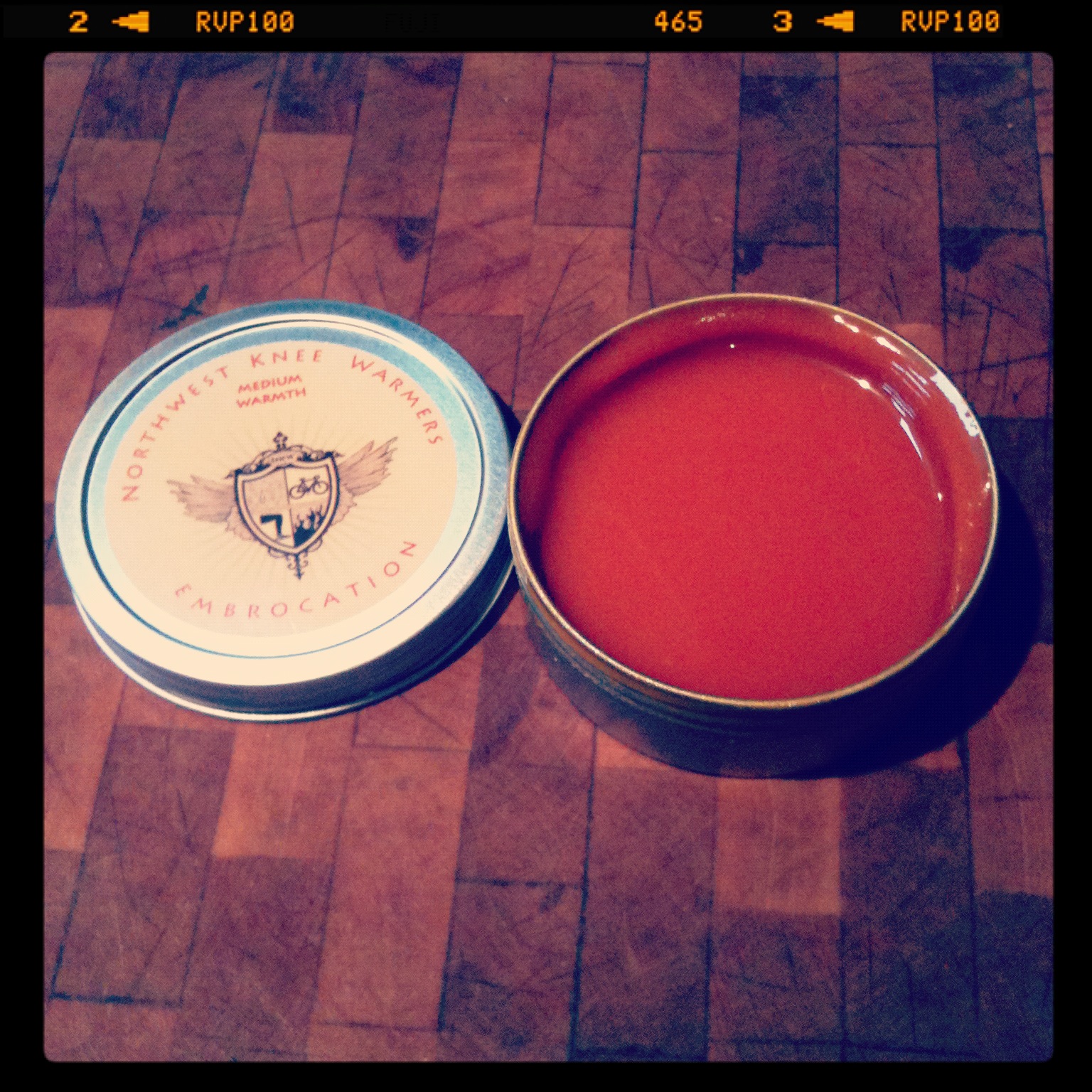
Embro


Note: this piece was drafted before the appearance of our 1 week of summer in late May. Don't let that put you off - it will be freezing and lashing down again soon and your thoughts will turn to embro again....


We all love getting packages in the post. This arrival was no exception - a perfectly proportioned little package containing a tin in a plastic bag and a post-it note. I'd been tipped off about my surprise by the sender, John Shaw, former professional off-road rider, Veteran cross racer and fellow Belgo-phile, but more on that later.

Embrocation is to cyclocross as bikinis are to beach volleyball. It would be unthinkable without, though there is one big difference - embrocation actually has a practical use, rather than an aesthetic purpose. Well, it has that too for some, but I digress.

Cross is a winter sport - it's usually cold or wet or cold AND wet unless you live in New South Wales, Australia which incidentally is experiencing a burgeoning cross scene. Even when it's summer cross in the UK, it's usually cold and wet too. Whilst there are obvious benefits of slathering your pasty white legs in something warming when the rain is horizontal and the temperature in single figures, apparently there are other benefits too as embrocation helps increase blood flow to the extremities, which decreases the pain of intense efforts on the bike. That'll be quite handy for cross then....

Either way, legend has it that embrocation originates from Belgium. It probably did, but even if that isn't true, most of us crossers would like that to be true because Belgium is the source of all things good when it comes to cross. Imagine my excitement then when the contents of the package was eponymously labelled 'Northwest Knee Warmers, Medium Warmth Embrocation'.


The smell hit me from the off. To be fair, most embrocation products don't exactly creep up on you when you open them - that would defeat the purpose - but this was very different. Previous versions of embrocation I have used have ranged between the evocative 'school rugby changing rooms' wintergreen smell, the clinical and slightly nasty ralgex reek of sports-type products or more recently the allegedly inspiring smell of an iconic barren-topped mountain in the South of France. This smelt like none of them. It smelt of Christmas, which was mildly unnerving given that it was May. My sense of smell is crap but I definitely picked up cinnamon, clove, mixed spices, maybe pencil, slate.... Maybe not. But cinnamon and clove anyway - warming, comforting winter season smells.

The company behind this festive fare, NorthWest Kneewarmers, is an interesting one. Formed out of the union between a naturopathic physician and a soapmaker they use very different ingredients to many of the other producers out there. Here's what they have to say:

We work hard to find and use the best ingredients possible. The bulk of our ingredients [over 95% by weight] are sourced domestically as close to home as possible, and all are natural. 


We choose ingredients based not only on its area of origin, but its process of manufacture.


We choose materials that have been either expeller/cold pressed [the base oils] or steam distilled [the essential oils], avoiding substances that have been solvent extracted whenever possible. Only one ingredient in our product [the capsaicin] has been solvent extracted as we haven't found it otherwise [yet].


We make the calendula extract ourselves from dried calendula flowers, and put the whole thing together in small batches right here in Oregon.

Well it shows - this stuff is different as I found out when I applied it at a somewhat chilly summer evening cross race in early May. Pretty liquid in texture, you might want to store it in a sealable bag as it shows a clear propensity to escape. This however comes into it's own when you apply - it goes on lovely. It's not overly greasy, but spreads easily and evenly. Whilst I have to my now not-so-secret shame been a past fake tan wearer, I do worry about looking like a badly tango-ed teenage girl, even on my legs. No worries here, smooth and even all the way and a pleasingly darker colour for to help non-Euro pasty legs look a little better.  And shiny too - by American standards, this would qualify for the Euro sheen look which we all know is worth a few seconds a lap.

This incarnation, 'Medium Warmth' is as it says on the tin - pleasantly warming without being too hot. Perfect for Autumn cross, or warmer mid winter days at the races. Or cross in May given the non-appearance of the Spring, let alone the Summer this year. It lasted well too but cleaned off well at the end so I didn't enjoy it's envigorating properties at 1am whilst trying to sleep after the race.

So far so good but the real winner for me was the clear skin-care effects of this embro. The notion of 'skin-care' for some products designed to do the same job can be a little tenuous. With some products, freshly shaved legs can end up looking like you have a dangerous infectious skin disease, such is the rash produced. Even less 'chemical' oriented products can irritate and inflame. This stuff was great - no irritation, and just like in the adverts on tele, 'great feeling skin'  after use. The naturopathic properties are apparent and very welcome.

How do I get some, I hear you ask? Until now, I'm not aware that there has been an offical UK stockist but that is about to change imminently. John Shaw is putting together what can only be described as cross lovers dream - a cross specific emporium filled with hard to find Belgian and US  cross-themed products. It's an idea I flirted with a while back, but didn't have the bottle or the skills to do. No matter, Fangoso, his new venture will fill this gap for me with it's 'passion for grime' ethos.

Look out for more on Fangoso soon.

Tuesday, 17 January 2012

2011/12 Retrospective


That's it. Done, over, finished for another year.

2011/12 cross season put to bed.

Not a vintage year racing wise, but a significant one nonetheless......

Plenty to work on for next year - a quicker Peaks time, power, core strength, maintaining speed through technical sections. All good stuff to inspire and motivate. Cross racing this season has felt harder and faster - and that's because it was. There are many more good riders coming in to cross from other disciplines, as well as others starting up and improving fast as they find the passion. Fields are considerably bigger across the country, with talent in depth amongst them. All in all, I feel it's been a bumper year for cross and the sport has been/is growing.

I started the season on cantilever brakes and finished it on discs. I still can't promote the advantages of discs enough and have hugely enjoyed being part of the 'first-mover advantage' of being disc-ed up. There are still a surprising number of detractors out there, most of whom clearly have not ridden discs on a cross bike but have made assumptions and arguments that are not entirely in possession of the facts.......

Discs are not perfect yet, but here is my central point. If my experience of riding on a purpose designed bike with 'only' cable/mechanical discs (not hydraulics), with technology 'borrowed' from existing mountainbike setups, has been so overwhelmingly positive, think how good it will be in a short while when systems that are purpose designed for cross come in to play. Systems that address the standard criticisms of weight (not overly relevant for average folk), modulation (also not a problem in my eyes), rotor size and suitability and so on. I've played a little with hydraulic systems and to be honest prefer the crisp, light action of my standard SRAM/Avid BB7 cable set up. Light, predictable, plenty powerful  and faultless in operation. I'm not sure I would ever want a hydraulic system for cross as things stand.....

However, I can't wait for the new ideas around hydraulics, the work on rim and wheel technology specifically for disc setups not to mention the avalanche of ideas and development that will come when the road market finally wakes up too.

My only worry is that I'm going to have to work even harder to keep up there in races once everybody else has caught up in the technology stakes.......

Monday, 19 December 2011

On one of those Dirty Discos for Planet X


Pic: Ed Rollason Photography/British Cycling


I rode my first race for Planet X yesterday.

I knew saying that would sound weird - the Planet X team has featured some quality riders over the years. Think original road hardmen Lovatt and Tanner in the early days, right through to the current crop of talented young riders and triathletes. Definitely way, way out of my league.

However, the recent growth of Planet X sister company On One's stable of bikes with the new Dirty Disco cross bikes, as well as mountain bike brand Titus means the addition of a more eclectic bunch of largely Northern based crossers and mountain bikers to the fold.

I'd 'appropriated' the Dirty Disco from the then incapacitated team rider Dave Haygarth back in October and have waxed lyrical about it ever since. It's been really exciting to be in at the beginning of the disc brake revolution (yes, that's what it is) within cyclocross and my ridings and reviewings have hopefully aided On One in establishing a firm footing within this new emerging market.

Either way, I've been taking the Disco around everywhere, and it has generated a great deal of interest at races and on the social networking sites that I share with a growing chunk of the cyclocross community. Discs will eventually become accepted as the norm, as the technology develops further and more efficiently and the Disco as a disc-only, affordable all carbon frame will no doubt become as well loved and used as the Planet X Uncle Johns that I and many others have been riding for years.

And my race? That went OK too - not as far up as I would have liked to have been, but hovering around the top 20 in a combined Senior and Vets field at Leverhulme Park, Bolton on a suitably muddy and slushy course. No clogging issues at all in really quite bad conditions, though I did change bikes mainly because I needed to keep my young son on his toes in the pits. The dirty (no pun intended) bike immediately got reused when I offered it to a fellow competitor who had broken his own rear mech and had no clogging issues for the rest of the race. Best bit? Hoofing down the main wooded descent, drifting both wheels delightfully whilst feathering the discs for control.

Steep, slippy descent - one finger braking control. That's the Disco experience in a nutshell.

Thursday, 17 November 2011

FMB Super Mud review


This Autumn saw the arrival of the much heralded FMB Super Mud tubular. For several seasons now, I had been gathering my own and others Dugast Rhino treads (as well as some carefully preserved green Michelin mud treads) and sending them away to Francois at FMB for recasing.

The rationale behind this was that although Francois makes the best (yes, better than Dugast) cross tubs available on the planet, his SSC, Fango and Grippo XL treads were great, but not according to conventional wisdom, as great as the imperious Rhino mud tread.

Much excitement then when US cross legend Molly Cameron sent me over the summer, a top-secret spy shot from Francois of the new FMB tread - destined as a Rhino-killer.


Molly confirmed what I had been hoping - that Francois had upped his game and met the Rhino hegemony head on. In the shot, the tread looked like a direct Rhino copy, with extra hooks on simply to avoid copyright type issues.

In the flesh, the tread is something different altogether. First impressions when the box arrived, to be eagerly ripped open, was of a quite different tread in many respects. Yes, the familiar arrows are there, but tipped with an extra barb at the bottom, they take on a different aspect. More importantly, they are much finer than on a Rhino - thinner and smaller and slightly shorter in height.

The attention to detail in construction is where the FMBs shine over Dugast - this year Francois has been adding an extra layer of material onto which the base tape is sown. This thickens and protects the most vulnerable part of a cross tub, the base tape/rim interface. This is where most tubs rot out, Dugast sometimes in only a season or so, even when Aquasealed. Not only does Francois factory proof his tubs with a substance that lasts longer than Aquaseal anyway, but this double layer near the basetape extends their durability by at least a season, meaning you may be able to get 3 seasons use with normal care and attention. It is for this reason alone, as well as the stronger materials used generally that I firmly believe FMBs are the best artisan cross tubs in the world, beating offerings from Dugast with ease.


The other significant difference is in the orientation of the side knobs. This is where I believe Francois has really done his homework. And possibly, if I may flatter myself slightly, as a result of the legion of green Michelin Mud treads I had been sending his way for conversion. As any green Mich Mud user knows, their grip is spectacular - as good or better than a Rhino. And they will also know from experience that much of this superior grip is down to the mud shedding abilities of the green tread against the Rhino which has a tendency to ball up. Balled up tires = ballsed up cornering as no matter how grippy at first, the treads begin to loose their awesome bite.


This has certainly been borne out by my own unscientific testing of both types in training and racing - Rhinos are superb in wet, greasy and sloppy conditions. But they loose their edge when things get stickier......

So how has Francois adapted a successful formula to his own ends and to what effect?

Well, he has clearly studied the green treads I kept sending him in the post - green treads have a concentration of knobbles toward the outer edge keeping the mid flanks of the tub a little clearer and allowing not only the predictable grip in cornering but also allowing the tread to shed mud as it things thicken up. Looking at a Super Mud in profile, that same double row of knobs close to the very edge of the tread is present, and the gaps are slightly bigger than on a Rhino tread. Using smaller, finer knobs is a also a winner - it allows equally competent grip but aids that all important shedding process.

The result?

Grip in wet slop is every bit good as a Rhino, and arguably as good as a green Michelin FMB conversion. But if things stick up a bit, then that awesome grip remains as it does with a green FMB, whilst the Rhino begins to struggle and slide away.......

This incredible grip combined with the construction and durability advantages outlined above make the Super Mud an absolute winner, and indeed what I had hoped for - a Rhino killer.


There are other great mud tubulars out there - think Specialised Terra or Challenge Limus - but if you are looking for the ultimate handmade quality and performance that you previously thought was only available with a Dugast Rhino, then I think you may have found your choice.

FMBs are hard to come by in the UK but cross promoter, importer  and general gruff Derby man John Holmes can set you up - call him on 07946 461972 to see what he can do.